Nenahraditeľné: Five Irreplaceable Slovakian Staples
Foundational products from home that simply cannot be substituted when cooking authentic Slovakian food abroad.
Running a kitchen far from home means adapting to local ingredients. But there are certain items that cannot be faked, substituted, or replicated. These are five things I cannot live without in America, Ireland, or anywhere else — not just because they remind me of home, but because they create that exact Ratatouille moment where a single bite triggers instant nostalgia and tastes precisely the way it always has. Maybe if I looked harder I could find a substitute, but sometimes you don’t want one. Nothing but the real thing makes sense.
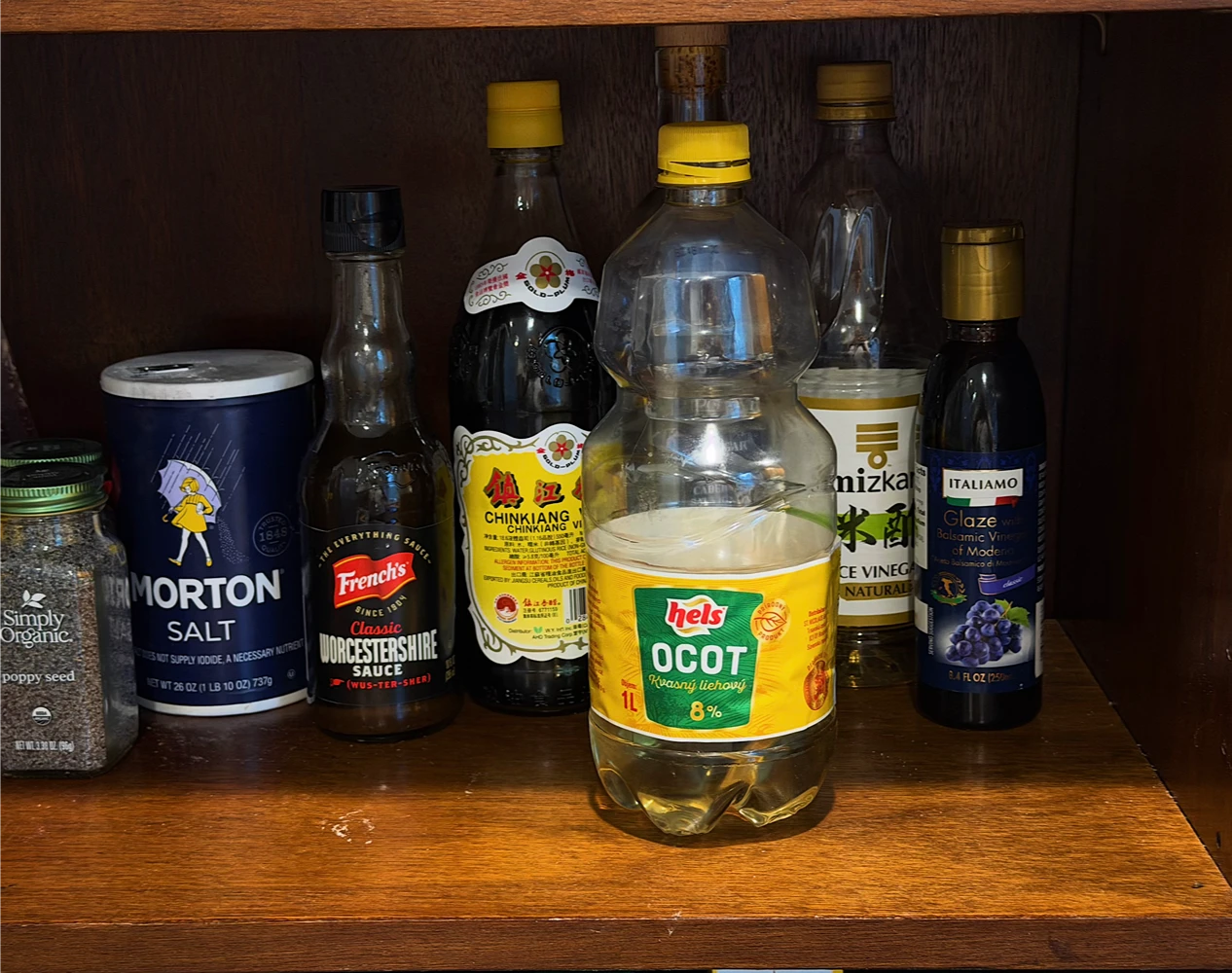
For me, kvasný liehový ocot is one of the most important ingredients. It is a clear spirit vinegar that provides a more balanced acidity than traditional 5% distilled white vinegar, yet avoids the aggressive harshness of something like a 10% Polish spirit vinegar. Crucially, it lacks the funk or distinct flavor profiles of balsamic or apple cider vinegars. It gives life to countless Slovak dishes, from deli salads to finishing sauces, or simply macerating raw onions in vinegar to serve alongside huspenina or tlačenka. It has an intensely familiar, nostalgic flavor, offering clean acidity without being overly abrasive.
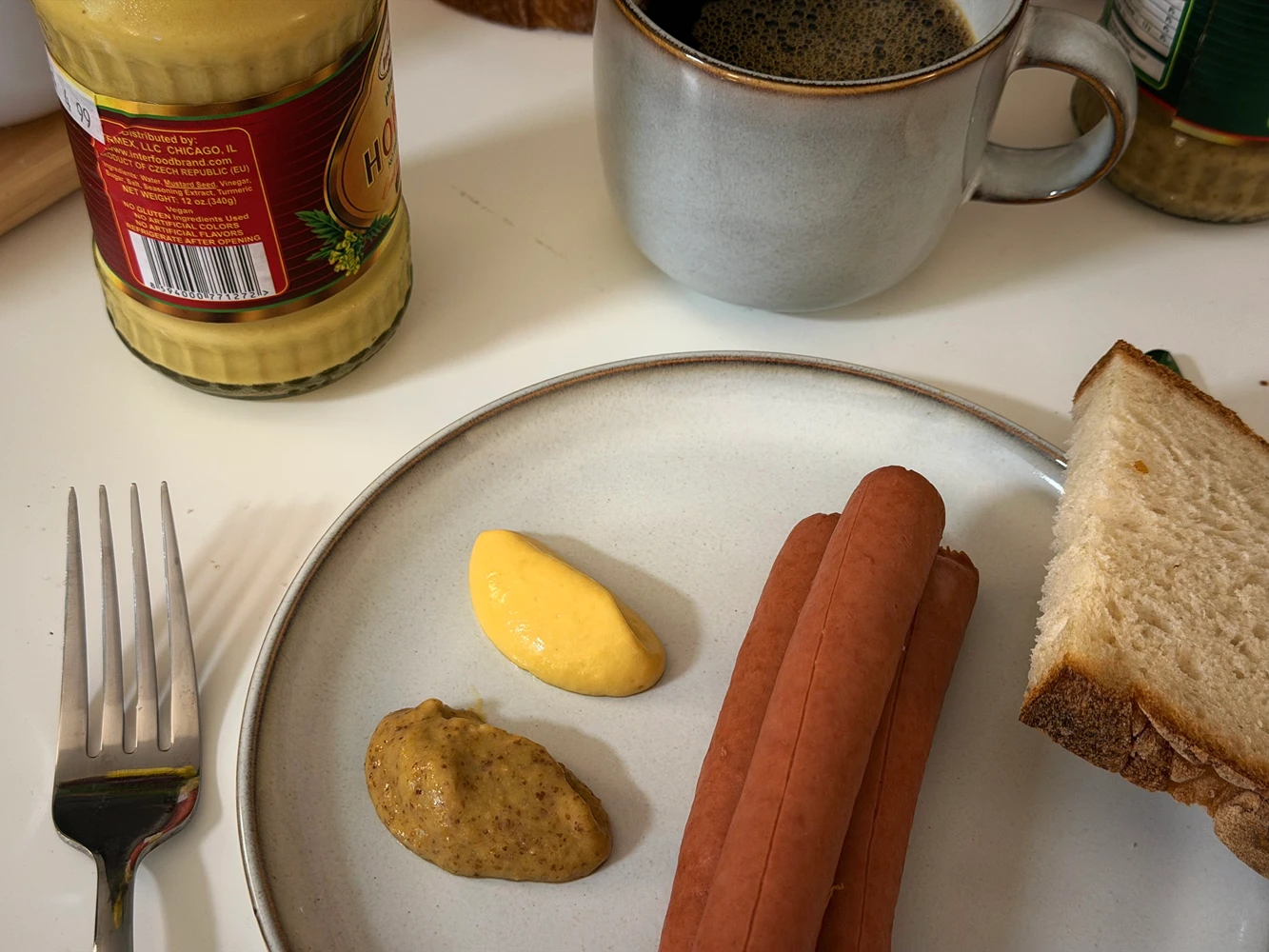
I honestly cannot imagine breakfast without having spišské párky, a generous swipe of mustard, and a nice piece of fresh bread or a rohlík. The flavor is profoundly nostalgic for me: tangy, with a gentle spice, especially in the coarsely-ground kremžská. It perfectly complements sausages and hot dogs, but it’s equally essential next to a roasted pork knuckle or grilled meats because it cuts right through the fattiness. It’s not as harsh or sinus-clearing as English mustard or Dijon, meaning you can use plenty of it without setting your nose on fire. While neighboring styles in Central Europe might sit close on a shelf, they aren’t quite the same. And when it comes in that iconic bottle bearing the St. Nicolaus mark, it hits so deep into Slovak culture that the empty glass jars live forever in every household as everyday drinking glasses — the classic horčičák.
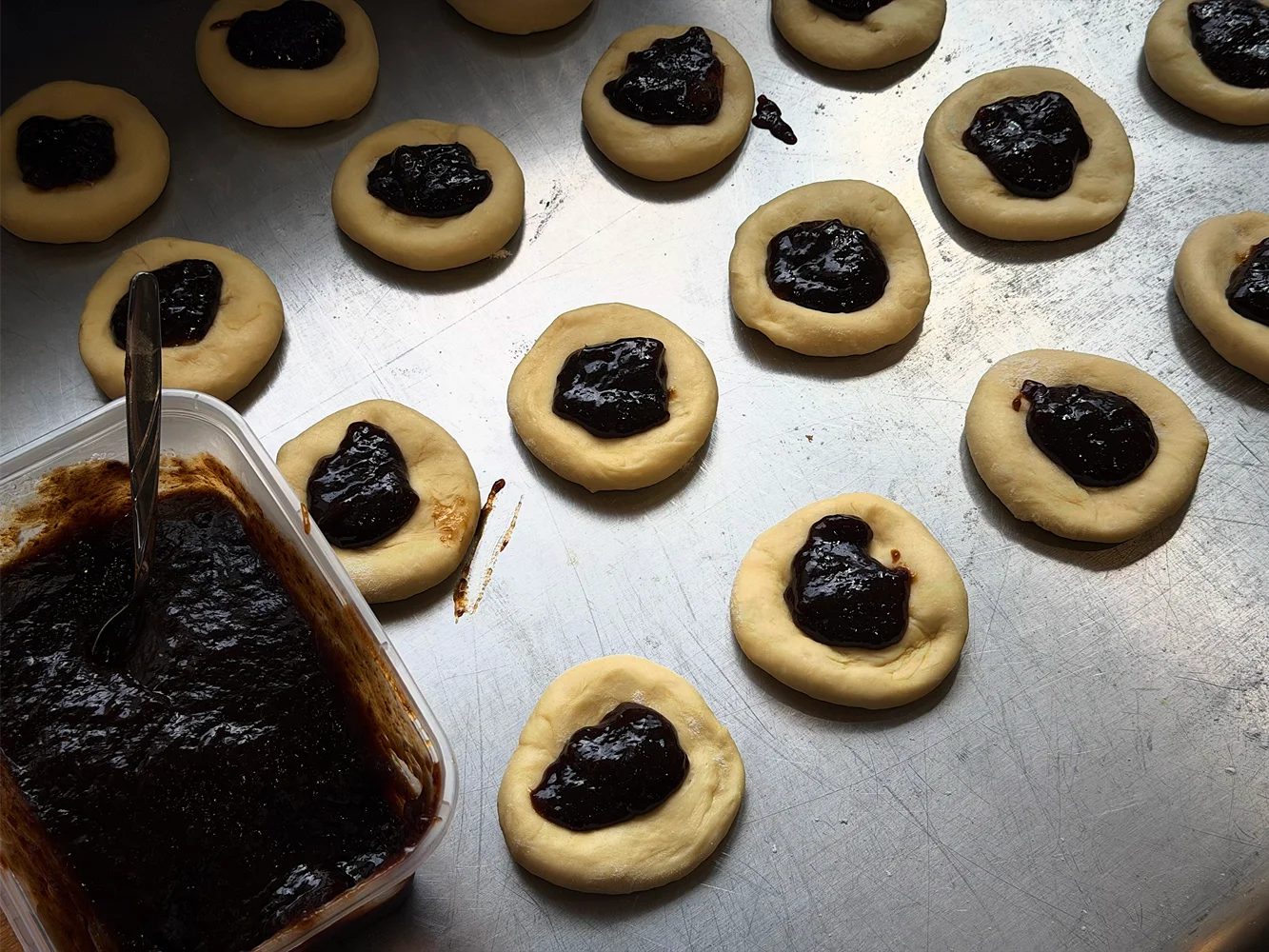
When it comes to plum jam, both my mother and I agree that Hamé — the Czech company — makes the absolute best version of tradičný slivkový lekvár. It achieves a perfect balance of sweet, savory, and deep umami character that shines across desserts like steamed buns (knedle na pare) or baked buchty. Beyond sweets, it’s incredible for finishing heavy meaty sauces, adding a rich, complex depth akin to a splash of Worcestershire sauce or a reduced balsamic glaze. It is nearly impossible to replicate with standard marmalades, which tend to lean overly fruity, sweet, or sharp; true slivkový lekvár possesses an earthy, savory-sweet profile that adds magic to anything it touches. It ties right into how we use prunes in soups, stews, and savory pan juices. Plums bring an inherent quality that elevates the entire dish.
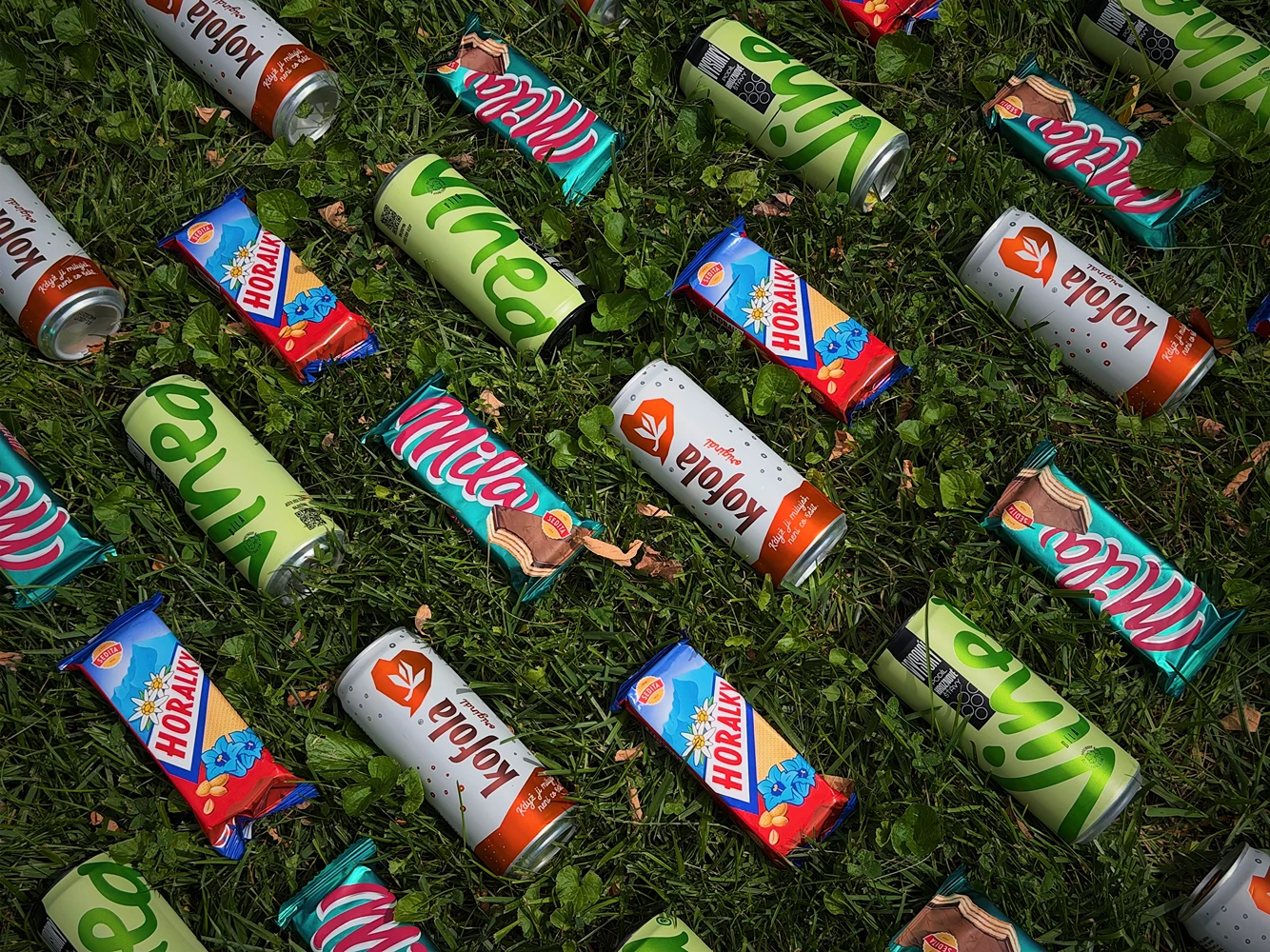
Kofola & Vinea are two iconic Czechoslovakian drinks that are entirely in a league of their own. People sometimes call Kofola an answer to Coca-Cola, but it is something entirely different — and frankly, better. While it’s good in a bottle and even better in a can, getting Kofola straight from the draft is an elite experience. An ice-cold pint on a hot summer day is the ultimate refreshment. With its herbal, licorice-kissed profile, it captures the very essence of Central Europe. Then there is Vinea — specifically white Vinea — which shatters the boring orange-lime-cola soda mold. While purple grape sodas usually taste completely artificial, Vinea delivers a subtle, crisp, aromatic white grape sweetness that is truly unique. (I’ve even experimented making my own version here, but it is very hard to replicate the exact flavour.) These flavors are anchored deep in my memory because growing up, sweet drinks were special treats saved for birthdays, Christmas, and New Year’s Eve.
Mila Wafers: While many people might expect Horalka as our national wafer-style snack, Mila is something entirely different and stands as my absolute favorite. It carries a strange, wonderful nostalgia with a flavor that almost feels alcoholic — giving a subtle spice on the tongue paired with a simple chocolate coating on top. It is pure nostalgia, and anytime I see Mila, I need to have more than one. While Horalky are elite and comparable to a few other wafer varieties out there, I don’t think I’ve ever tasted anything quite like Mila, and I can’t wait to have another one when I get back home.
Honorable Mentions
- Bryndza: Our national cheese, which holds a protected designation of origin (PDO). It’s rich, creamy, and tangy, and forms the soul of our national dishes. While it’s fantastic, I can occasionally work around it by making my own version that people never complain about, which is why it missed the absolute top five.
- Korbáčiky & Parenica: Delicious hand-pulled, salted, and smoked string cheeses from Orava. While I love cheese, my personal preferences tend to lean toward something a bit more refined like an aged Gouda or an unctuous Époisses. That said, as a television-snacking cheese they are hard to beat — and if you’ve ever had deep-fried korbáčiky akin to vyprážaný syr, that is truly something else entirely.
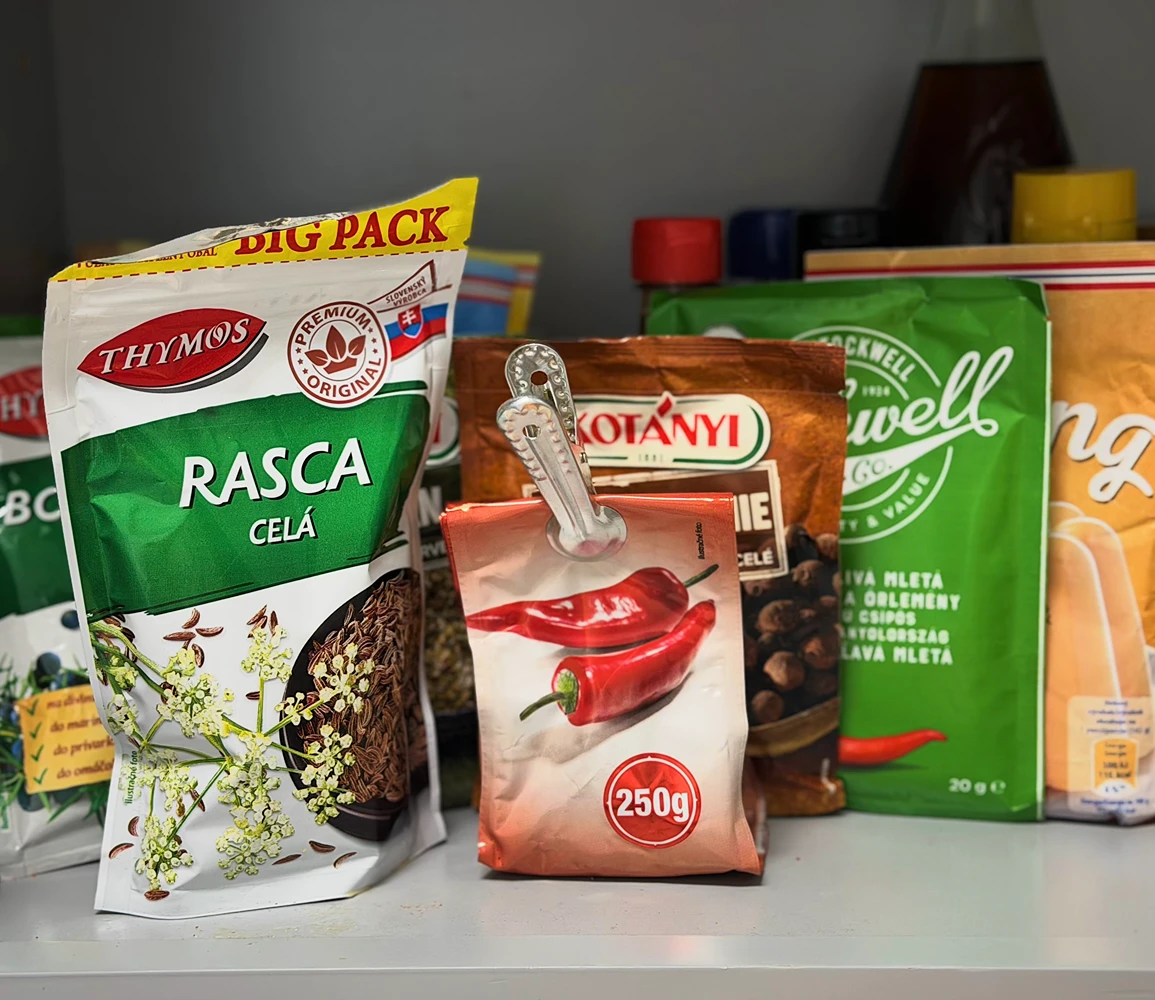
- Hungarian Paprika: Ironically, despite it being a Hungarian ingredient, we use sweet paprika in such massive abundance across Slovak kitchens that it’s a mandatory pantry staple. You need top-grade paprika from Szeged or similar origins to achieve the proper flavor, aroma, and color for a genuine szegedi gulyás or stews in general; you simply won’t find a Slovak kitchen without it.
- Slovakian Rasca (Caraway): Caraway seeds carry an earthy, pungent intensity that completely transforms breads, stews, and kapustnica. Many people note that caraway away from Europe tastes completely different, and I fully concur. To me, rasca acts much like a bay leaf: it adds that essential je ne sais quoi and elevates so many dishes that I cannot imagine cooking without it, even if it’s sometimes hard to precisely pinpoint the exact flavor profile it contributes.
- Arašidové Chrumky: Peanut puffs from MIVA Nitra. If there is one snack that defined my childhood and remains my all-time favorite, this is it. Light, crunchy, intensely peanutty, and completely distinct from American peanut butter puffs—open a bag anywhere in the world, and you are instantly transported right back home.